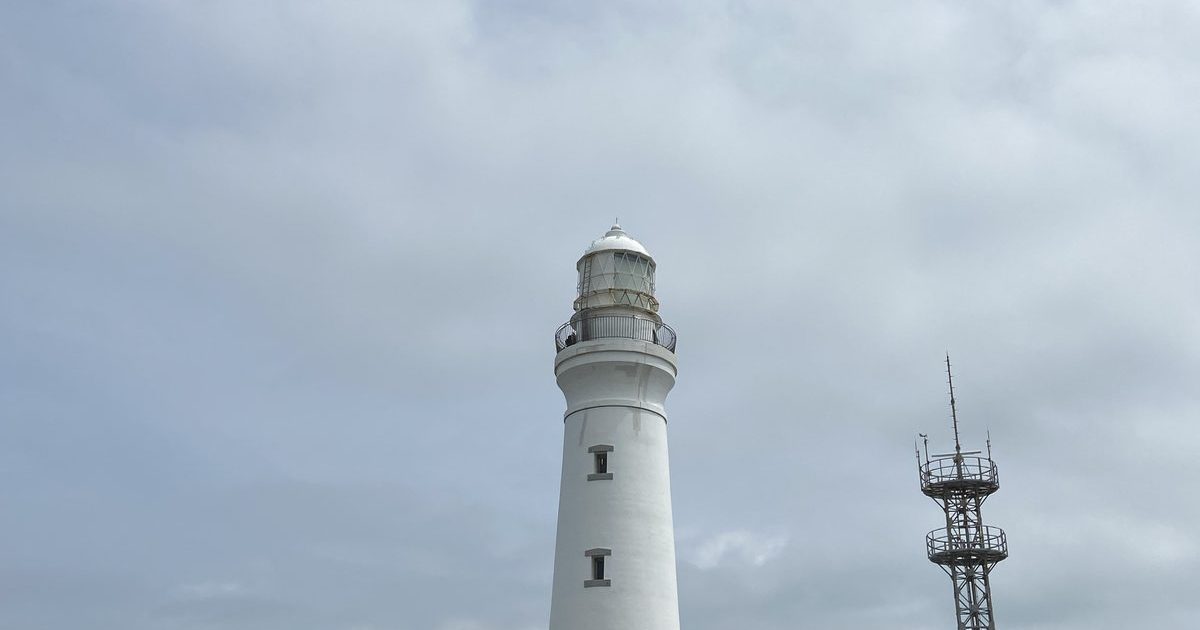
Choshi: A Tiny Train to the Lighthouse at Kanto's Edge
Ride the tiny Choshi Electric Railway to Inubosaki Lighthouse: 99 spiral steps, a ¥300 ticket, big Pacific views — plus wet senbei and a sardine arrabbiata by the beach.
A Japanese local's lunch on Miyajima: the anago-oyster-roast-beef set at Mametanuki, piping-hot fried momiji from Momijido — and how much time the island really needs.
Everyone writes about Miyajima’s floating torii. Fair enough — it is on this site’s front page too. But when I took the ferry over on a March Sunday in 2023, alone, the plan was simpler: see the shrine, and eat well. This is the eating-well part — and the honest answer to how much time the island actually needs.
| Getting there | Drive or train to Miyajimaguchi, then a ferry — about 10 minutes across |
| My timeline | 11:40 ferry in, 14:30 ferry out — 2.5 hours covered lunch, the shrine, and a snack |
| The lunch | Mametanuki’s Aki-no-Kuni Zukushi set: anago-meshi + fried oysters + roast beef |
| The snack | Fried momiji manju, eaten hot on the street |
| Lunch queue | 10–20 minutes at noon on a Sunday |
Mametanuki (穴子と牡蠣 まめたぬき) sits inside the Kinsuikan ryokan on the main street, and the set to order is the Aki-no-Kuni Zukushi (安芸乃国づくし) — “all of Aki province,” listed on the English menu as the Hiroshima Special — which bundles the island’s two signatures with a third from the mainland:
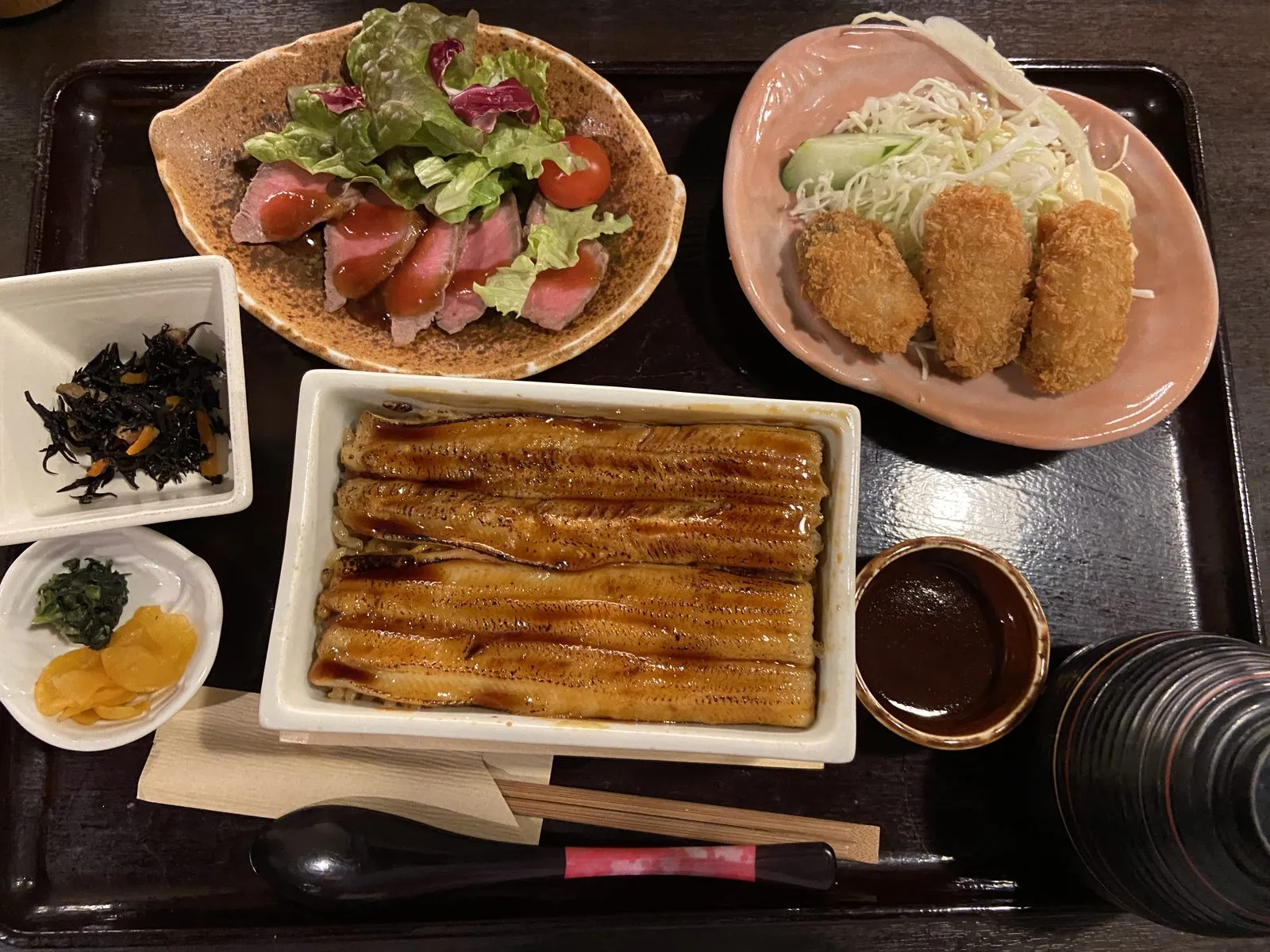
The Aki-no-Kuni Zukushi set: two whole anago over rice, Taoshita roast beef, three fat fried oysters — and the sides that come along for the ride.
I lined up at noon on a Sunday and waited ten to twenty minutes — reasonable for the island’s main street at peak lunch. Solo diners slot in easily.
Momiji manju — the maple-leaf-shaped cake — is Miyajima’s souvenir. The version worth your attention is the fried one (age-momiji) at Momijido (紅葉堂): battered, fried to order, handed over hot. Mine was koshian (smooth red-bean paste): the shell crisp, the inside steaming and fluffy, the sweetness restrained. It is as much about the texture as the taste — and it does not survive being carried home. Eat it on the spot.
The food slots neatly around Itsukushima Shrine itself. With the tide in, the shrine does its famous trick: vermilion corridors running over open water.
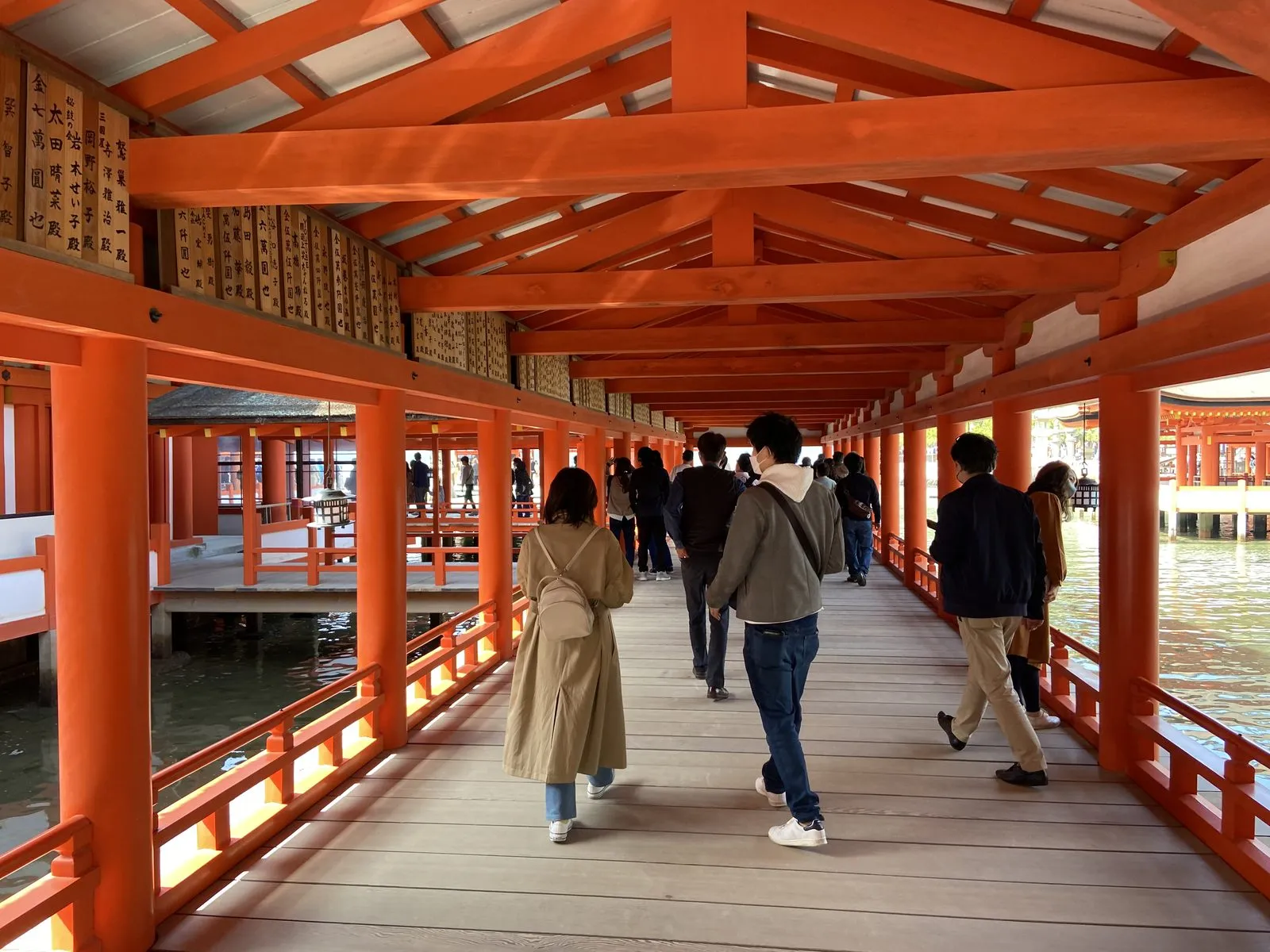
The corridors with the tide in — water underfoot the whole way.
And from those corridors, the money view: the great torii out in the bay, with a tour rowboat sliding under the gate.
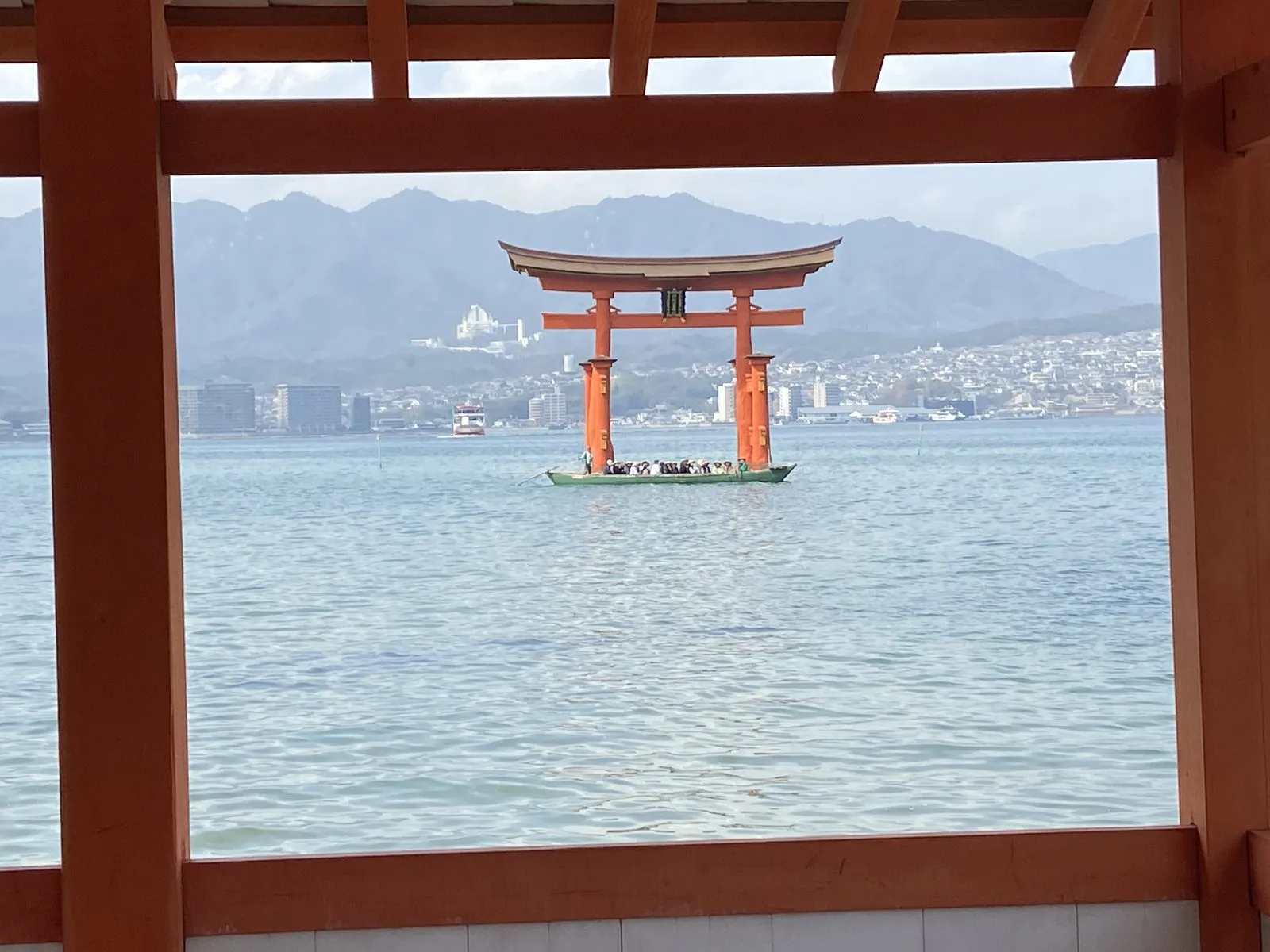
The torii framed from the corridors, boat passing under. This is the tide-in version.
One honest note on tides: the torii “floats” at high tide and stands on wet sand at low tide, and both are worth seeing. I only caught the water version. If walking out to the gate is on your list, look up the tide table before picking your ferry time.
The famous deer, for the record, were thoroughly mellow that day — lounging around the shore, minding their own business.
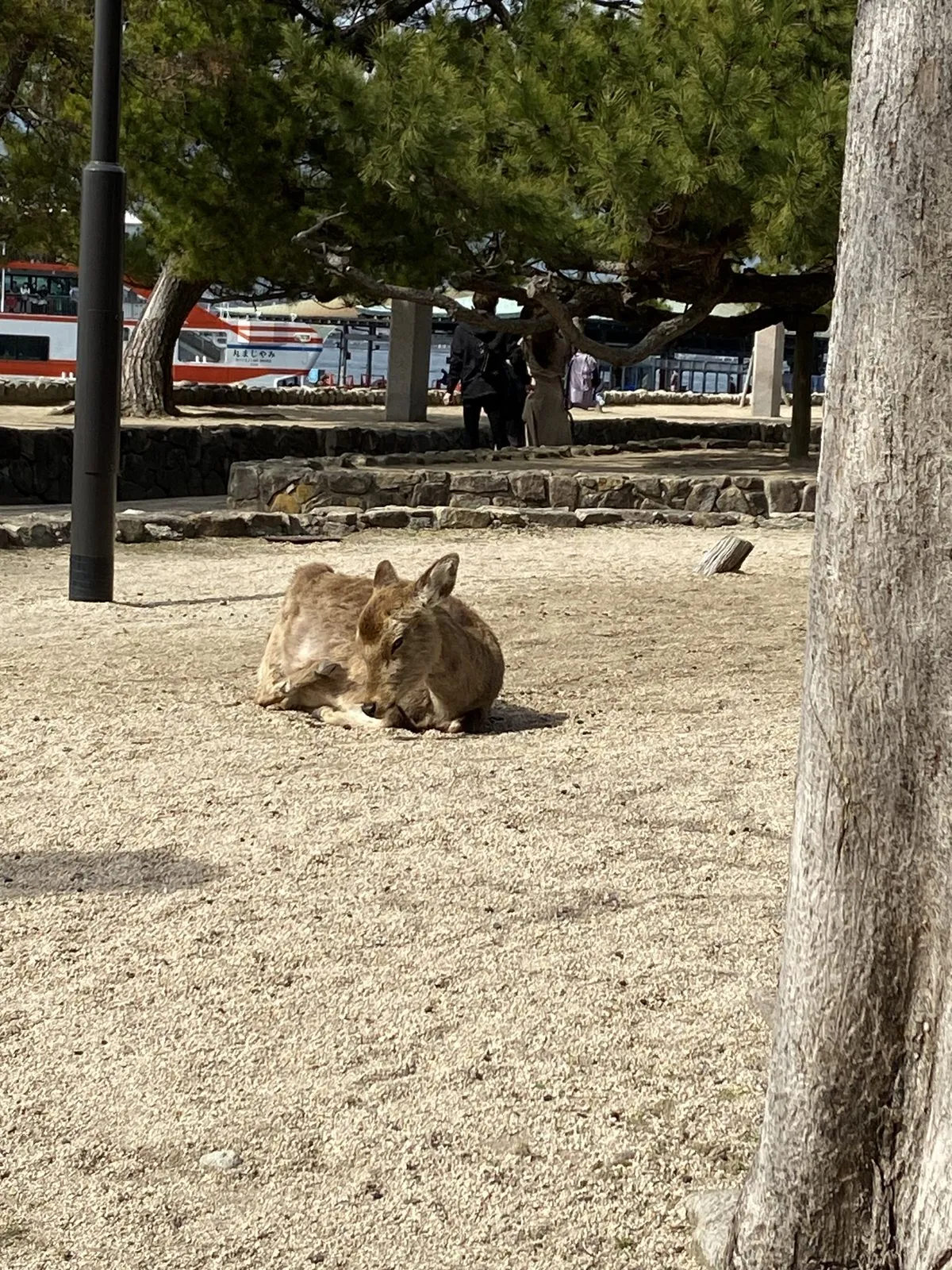
Exhibit A: a thoroughly mellow local.
For the shrine, the main street, a proper lunch and a hot fried momiji: my 2.5 hours was enough, and it did not feel rushed. As a half-day trip built around one very good lunch, the island works perfectly.
Staying longer? The Miyajima Ropeway climbs from Momijidani Park up Mt. Misen in two stages — about fifteen minutes of riding — and the Shishiiwa Observatory at the top station lays the Seto Inland Sea out in islands below you. The true summit is another half-hour on foot beyond that. I skipped it this time, which is exactly why 2.5 hours felt like enough; budget roughly two extra hours if you won’t.
Ride the tiny Choshi Electric Railway to Inubosaki Lighthouse: 99 spiral steps, a ¥300 ticket, big Pacific views — plus wet senbei and a sardine arrabbiata by the beach.
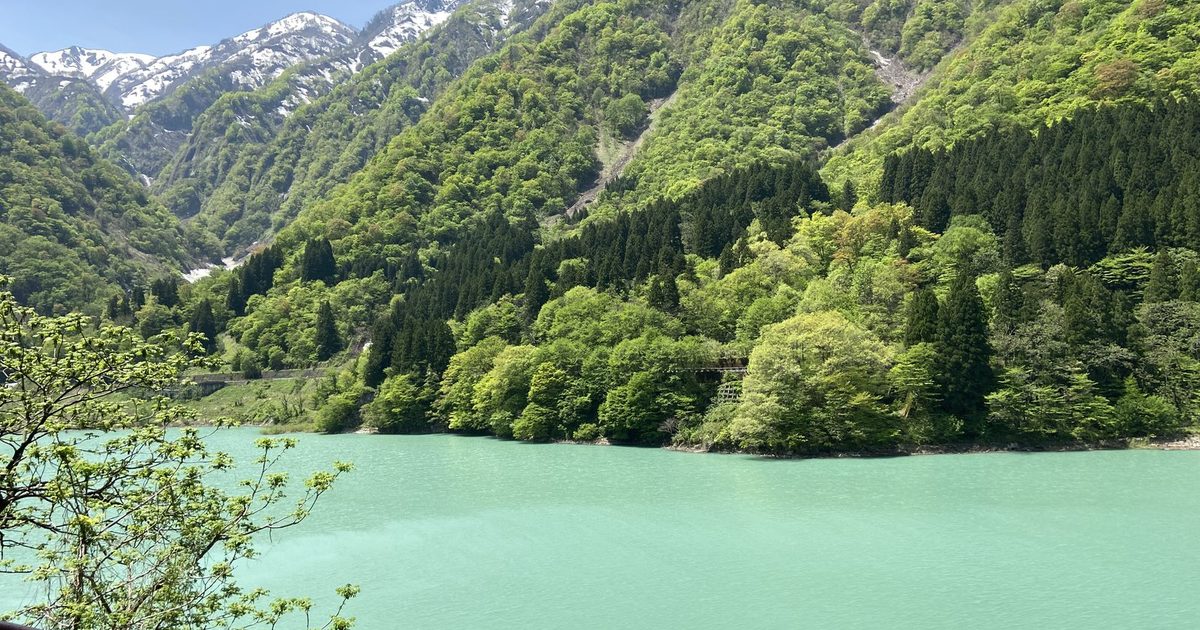
Riding Japan's best little mountain railway from Unazuki Onsen: emerald dam lakes, a castle in the gorge, firefly-squid shabu-shabu at the ryokan — and the full line reopens October 2026.
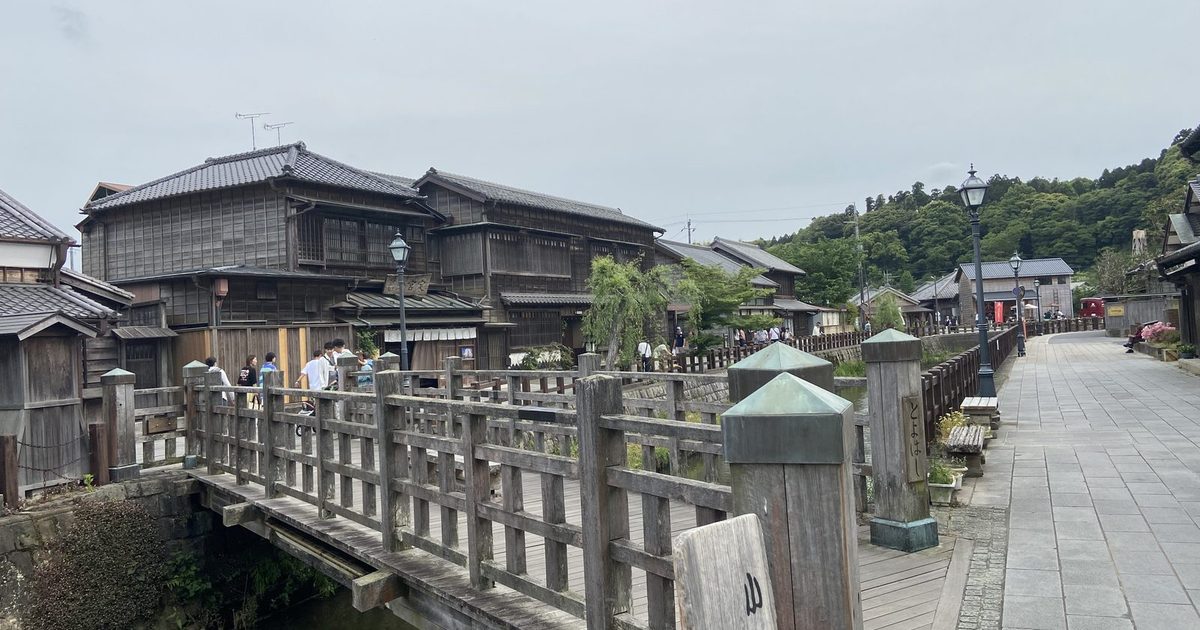
A preserved Edo merchant town on a willow-lined canal, right by Narita Airport: sleep in a restored merchant house, meet the man who mapped Japan on foot, and finish at mighty Katori Jingu.