Kurobe Gorge Railway: Open Cars Over Emerald Water
Riding Japan's best little mountain railway from Unazuki Onsen: emerald dam lakes, a castle in the gorge, firefly-squid shabu-shabu at the ryokan — and the full line reopens October 2026.
Visited May 2025 · Published September 1, 2026 · by Hyde
KurobeUnazuki OnsenToyamascenic railway
The Kurobe Gorge Railway is a narrow-gauge line of open-sided cars that rattles from
Unazuki Onsen deep into one of Japan’s steepest gorges. My family rode it in May
2025, when snow still streaked the peaks and the dam lakes below glowed an emerald that
looked color-graded. It wasn’t even the full route — and it was still one of the best
train rides in Japan.
First, the news that makes this worth planning now: after the 2024 Noto earthquake
damaged a bridge deep in the gorge, the line has run shortened for three seasons. From
October 1, 2026, the full route to Keyakidaira finally reopens — just in time for the
gorge’s famous autumn colors.
Quick facts
Base town
Unazuki Onsen, Toyama — Hokuriku Shinkansen + a short local line, or drive (we drove)
The ride
Open-sided torokko cars; we rode to the Sasadaira turnaround, the earthquake-era terminus
Full line
Unazuki → Keyakidaira service resumes October 1, 2026; season runs to late November
Where we stayed
Togen ryokan, ¥38,650 per person with two meals
The ride: emerald out both windows
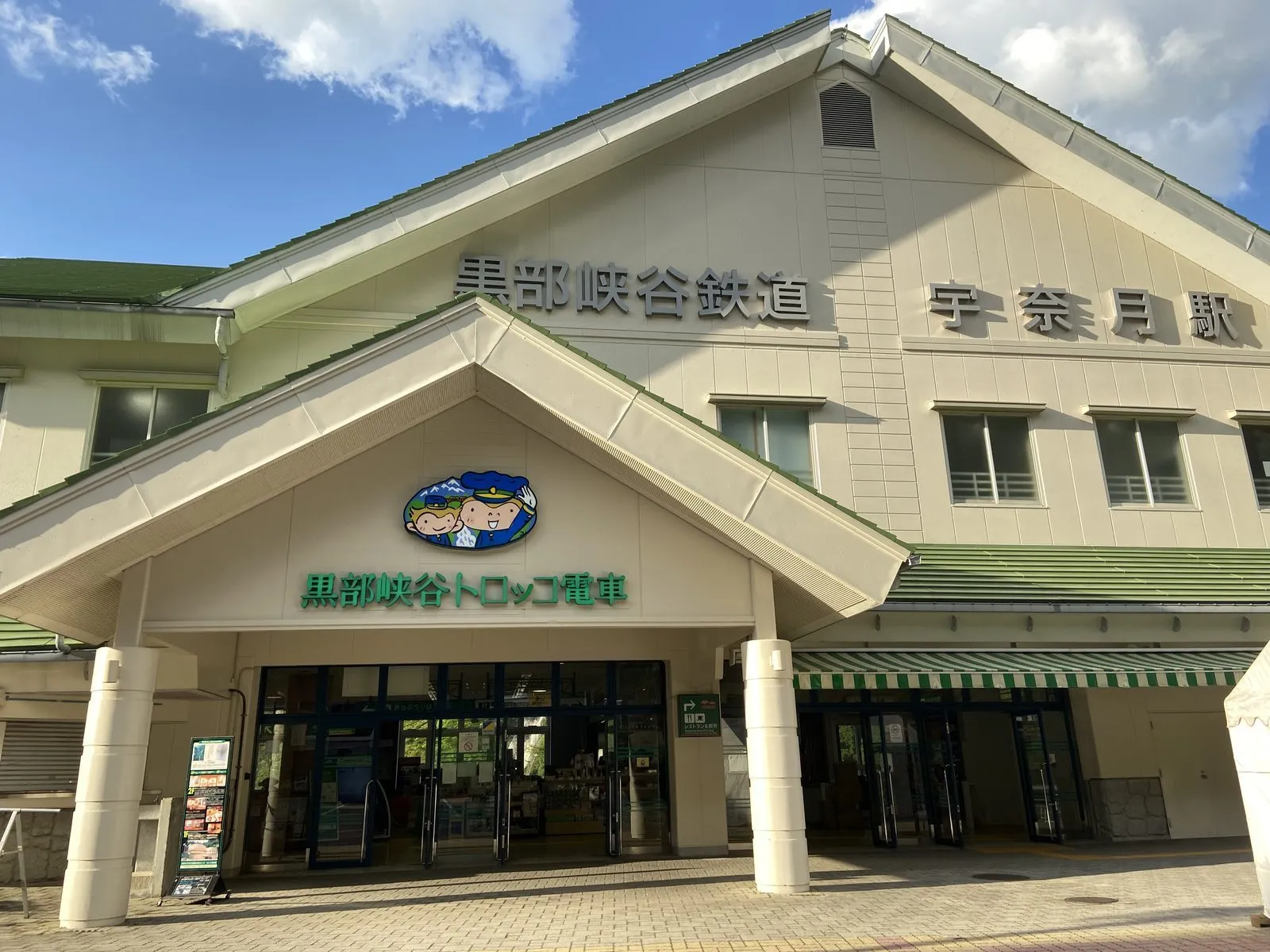
Unazuki Station, where the gorge line begins — a few minutes’ walk from the onsen
street.
The cars are genuinely open — a roof, a bench, no glass unless you pay for the enclosed
class — so the gorge arrives with wind and river-noise included. Minutes out of Unazuki
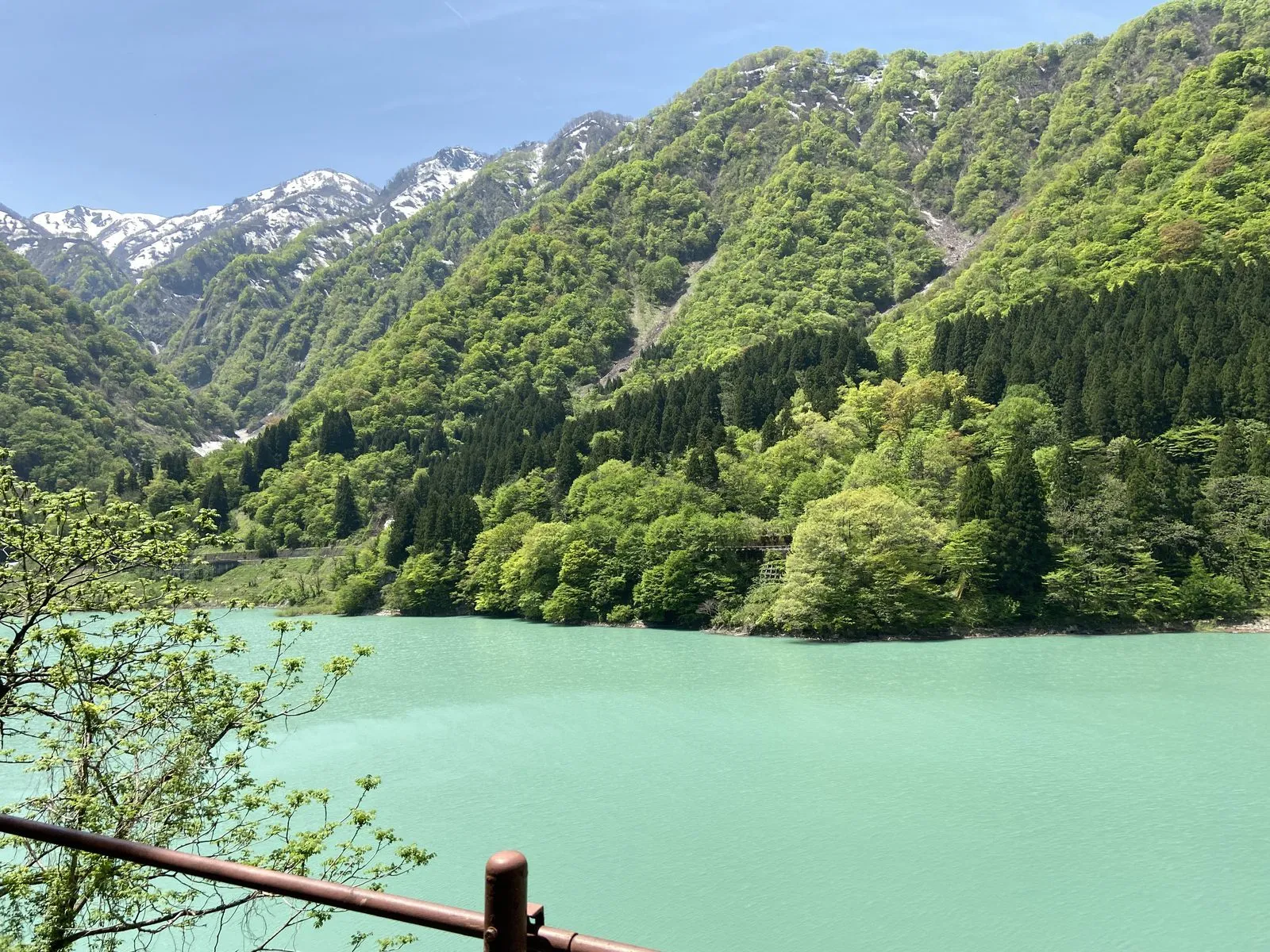
the first reservoir appears, and the color is the whole show: a milky, mineral emerald
that no photo filter touches.
May in the gorge: new leaves below, last snow above, and that water.
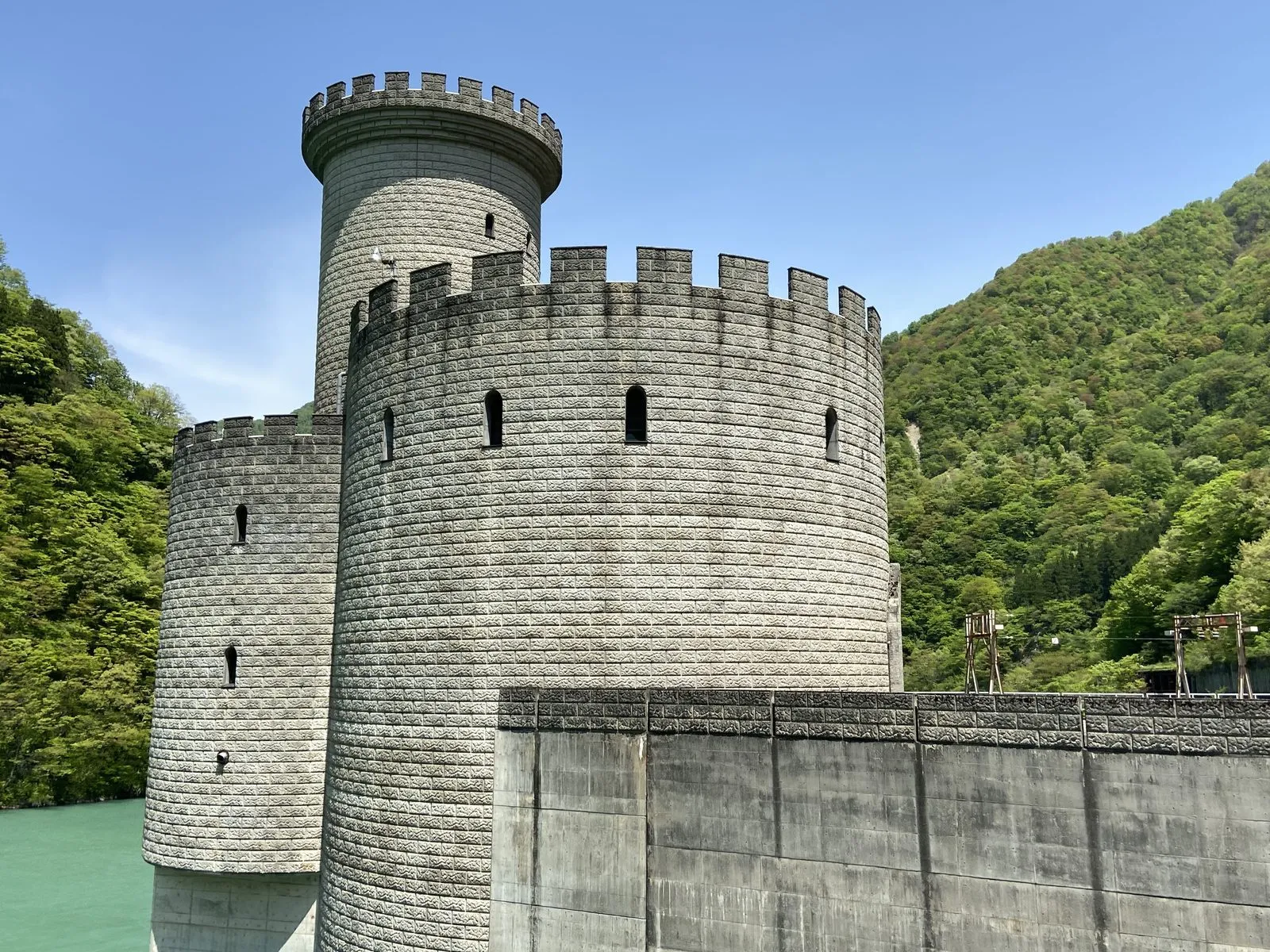
The Shin-Yanagawara power station, built to look like a European castle — the gorge’s
strangest sight, best seen from the train.
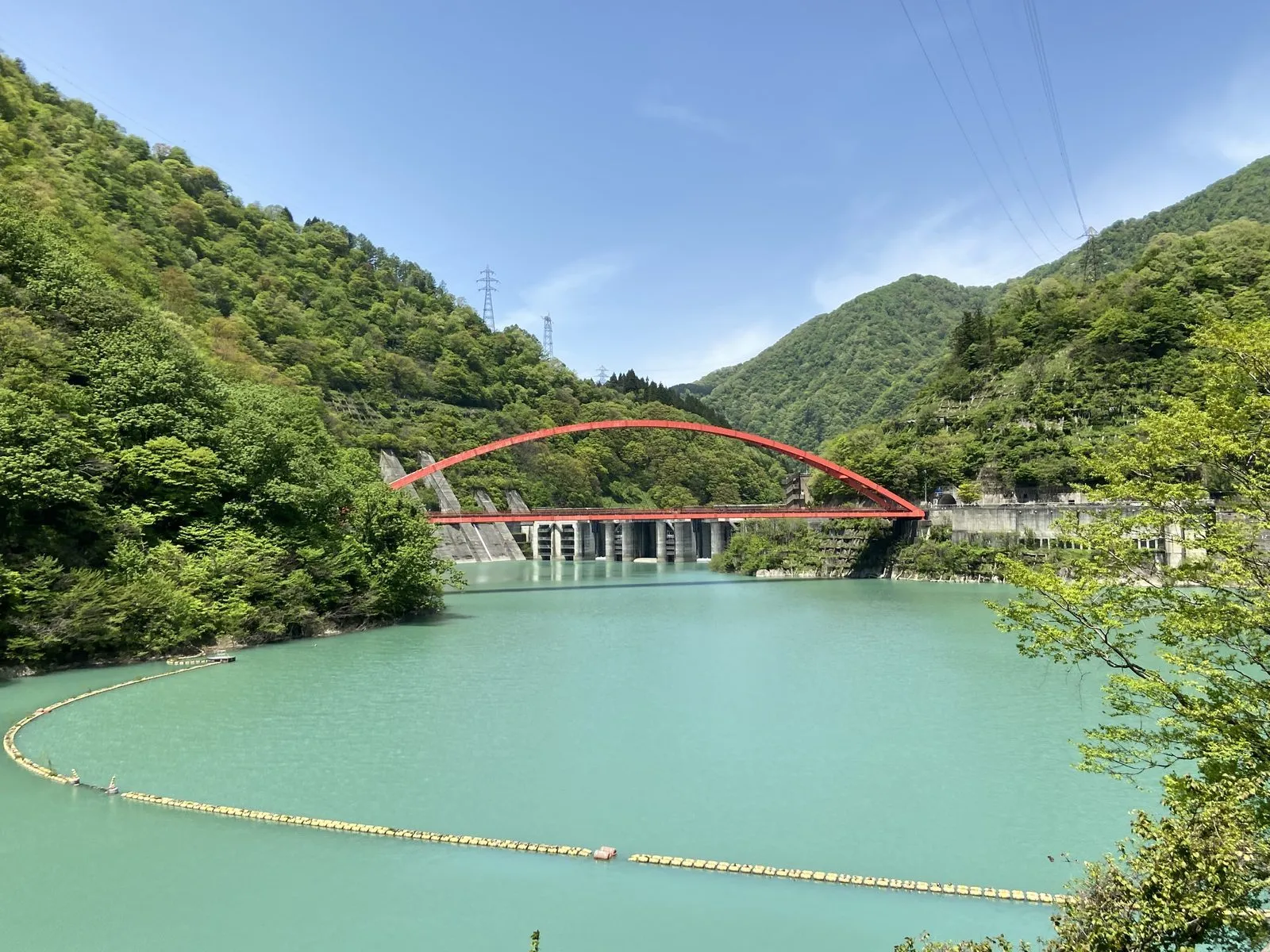
A red arch over the reservoir near Unazuki Dam.
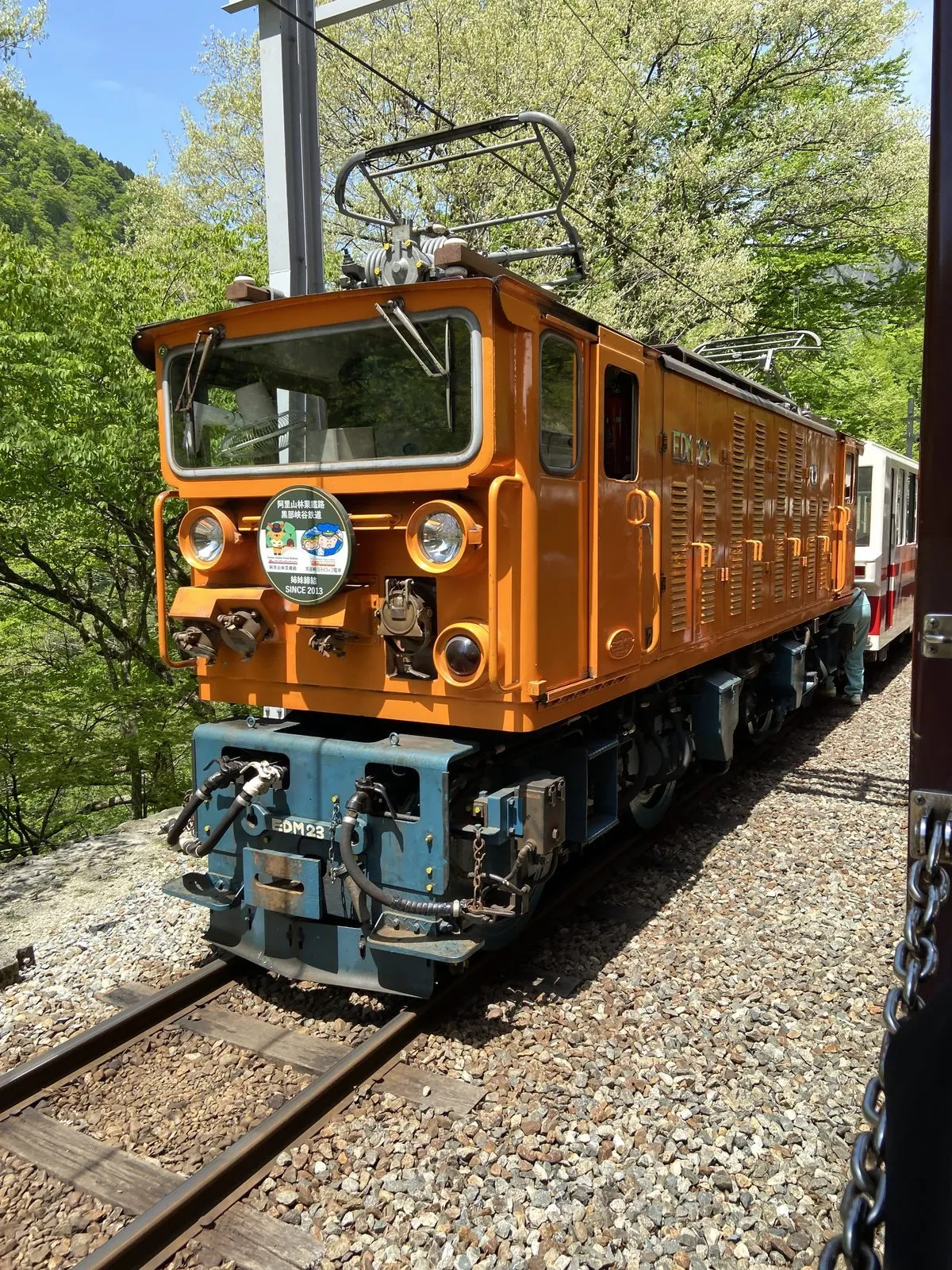
We rode as far as Sasadaira, the temporary terminus that spring, where the
locomotive uncouples and runs around the train for the trip back — a little ritual the
rail-minded will enjoy.
The orange locomotive running around at Sasadaira. The headmark marks the line’s
sister-railway pact with Taiwan’s Alishan Forest Railway.
Riders from October 2026 get what we couldn’t: the full run to Keyakidaira, twice the
gorge and its deepest scenery. Frankly, I’m a little jealous.
One tip for the ride itself: on the way to Unazuki, Ariso Kitokito-an (有磯きときと庵)
in Kurobe does takeout, bento included — and its seared (aburi) masu-zushi was the
best pressed-trout sushi I have ever had. Masu-zushi is Toyama’s signature box meal, and
picking one up beforehand to open on the open-air car, gorge sliding past, is a
completely legitimate plan.
The free show: watch the train cross the red bridge
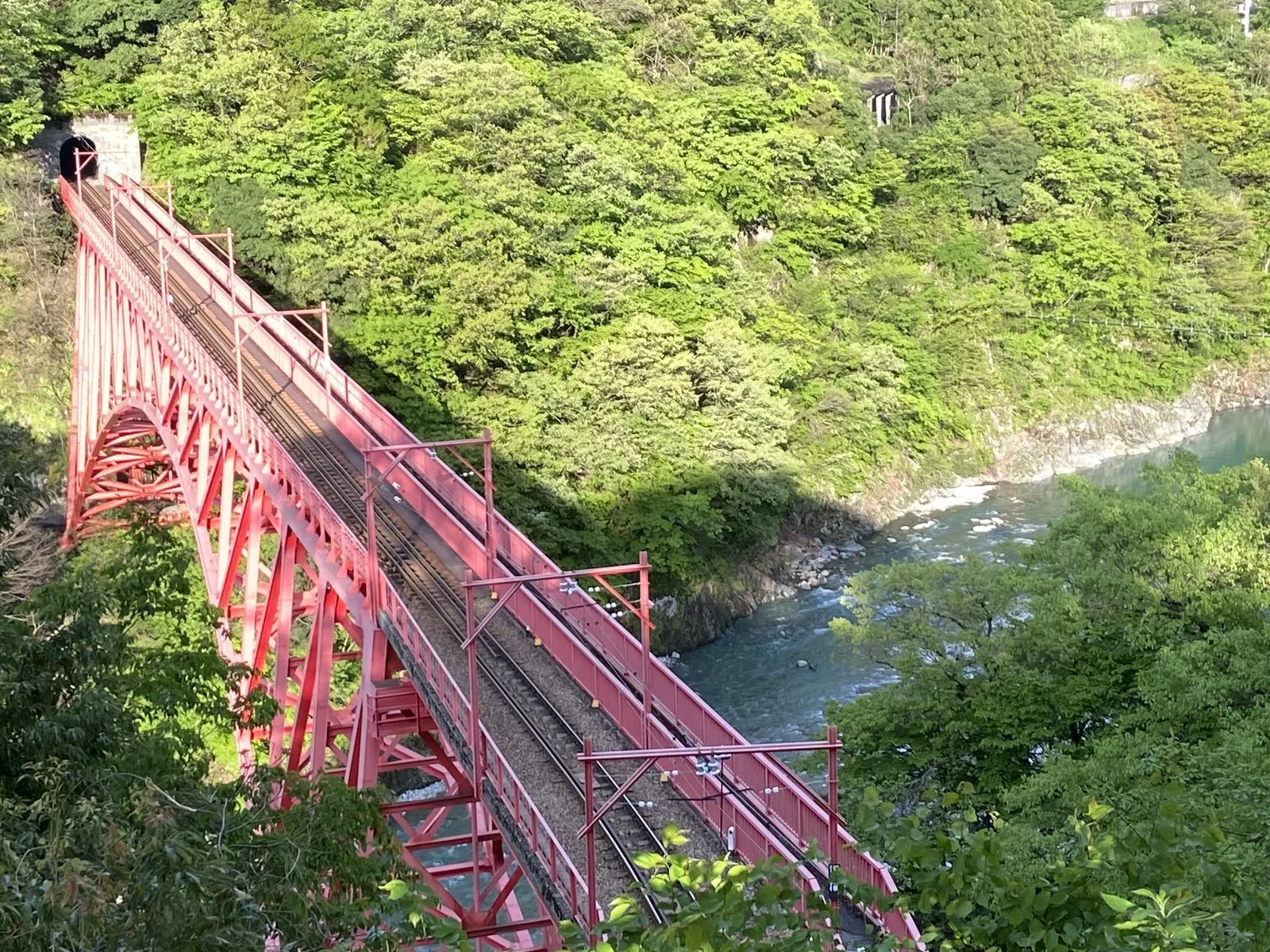
Back in Unazuki, walk ten minutes up to the Yamabiko viewpoint: it looks straight
onto the red Shin-Yamabiko bridge, and if you time it with the schedule you’ll watch a
toy-sized orange train clatter across the gorge — we did, and it’s the town’s best free
entertainment. The Unazuki Dam viewpoint nearby adds the reservoir angle.
The Shin-Yamabiko bridge from the viewpoint. Wait a few minutes and a train will cross
it.
The stay: Togen, and a morning bath over the river
We stayed at Togen (桃源), one of the classic ryokan in Unazuki’s compact onsen
street, at ¥38,650 per person with two meals. The building shows its age in places
but everything was clean, and the room looked straight over the river — you fall asleep
to it.
The baths were the highlight. Best of all was the private kashikiri bath, which
works on a simple first-come system: if the sign hanging outside says vacant, it’s
yours. We caught it free in the morning and soaked while the river slid past below —
the highlight of the stay. Check that sign early.
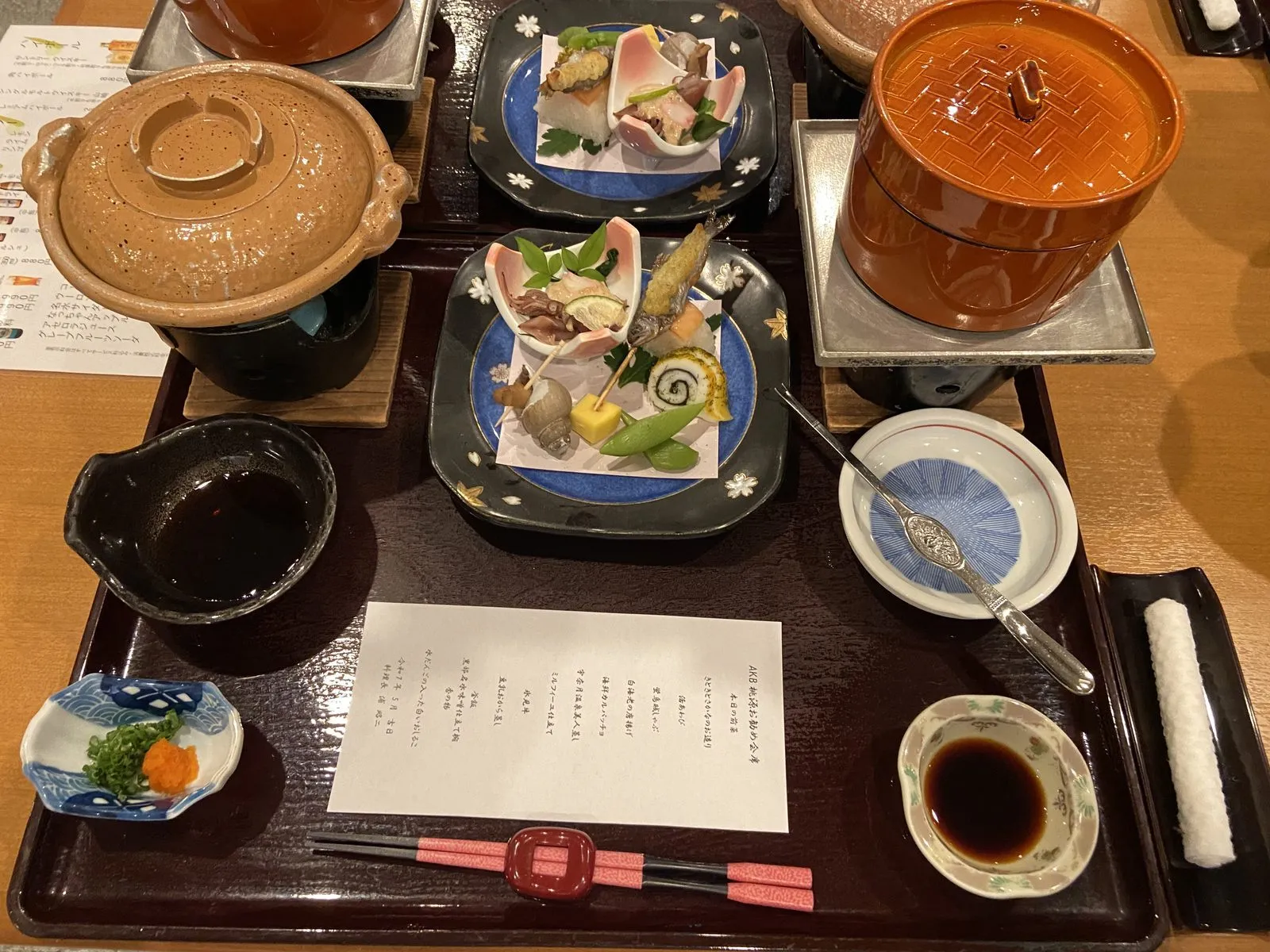
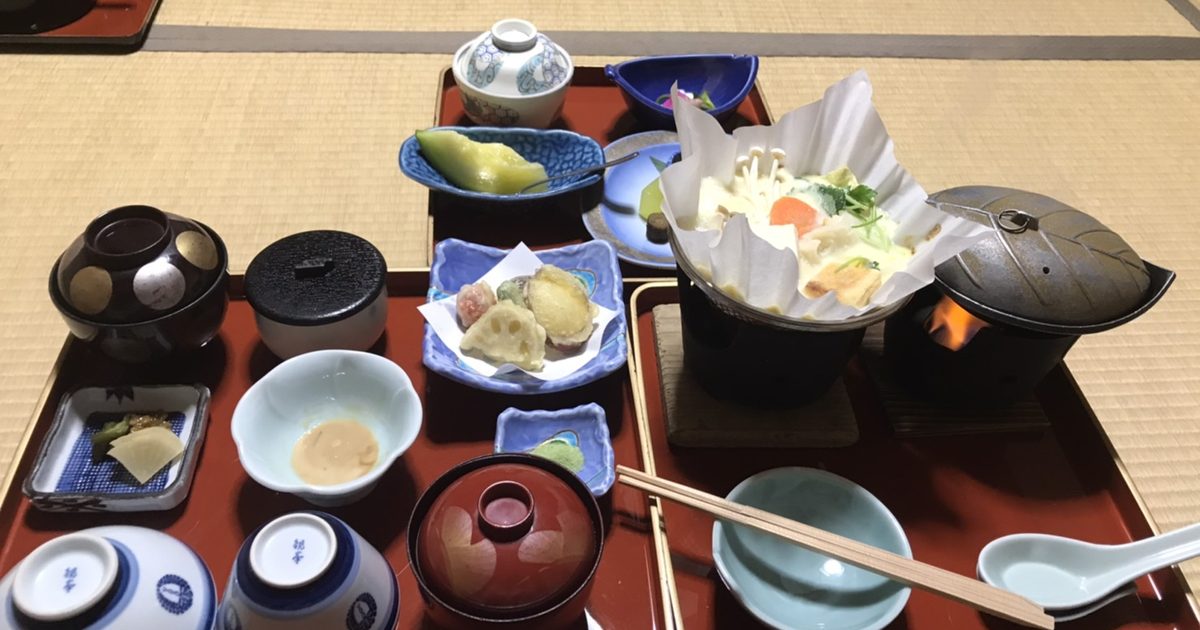
Dinner at Togen: a parade of Toyama’s May specialties.
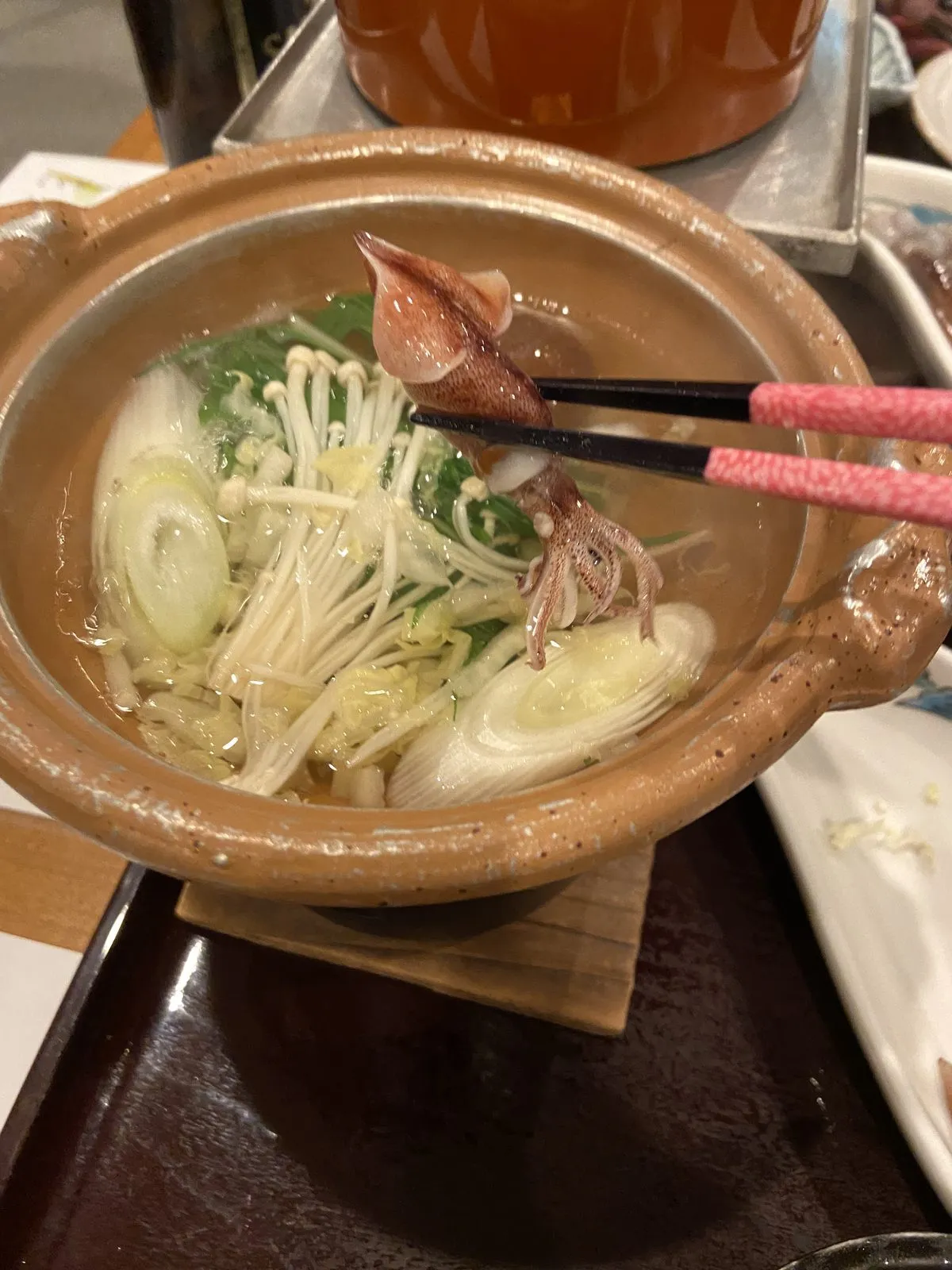
Dinner ran through Toyama’s spring repertoire, and the table’s showpiece was firefly
squid shabu-shabu — you cook the little squid in the broth yourself, and the house
rule (as we were warned) is simple: once they’re done, lift them out. Let them linger
and they burst.
Hotaruika shabu-shabu: cook them through, then out — overstay and they pop.
One confession that doubles as advice: Togen offers onsen-tamago making — boil your
own eggs in the spring water — and we missed it, because we got so absorbed wandering
the onsen street that its reception hours ended. Learn from us: eggs first, stroll
after.
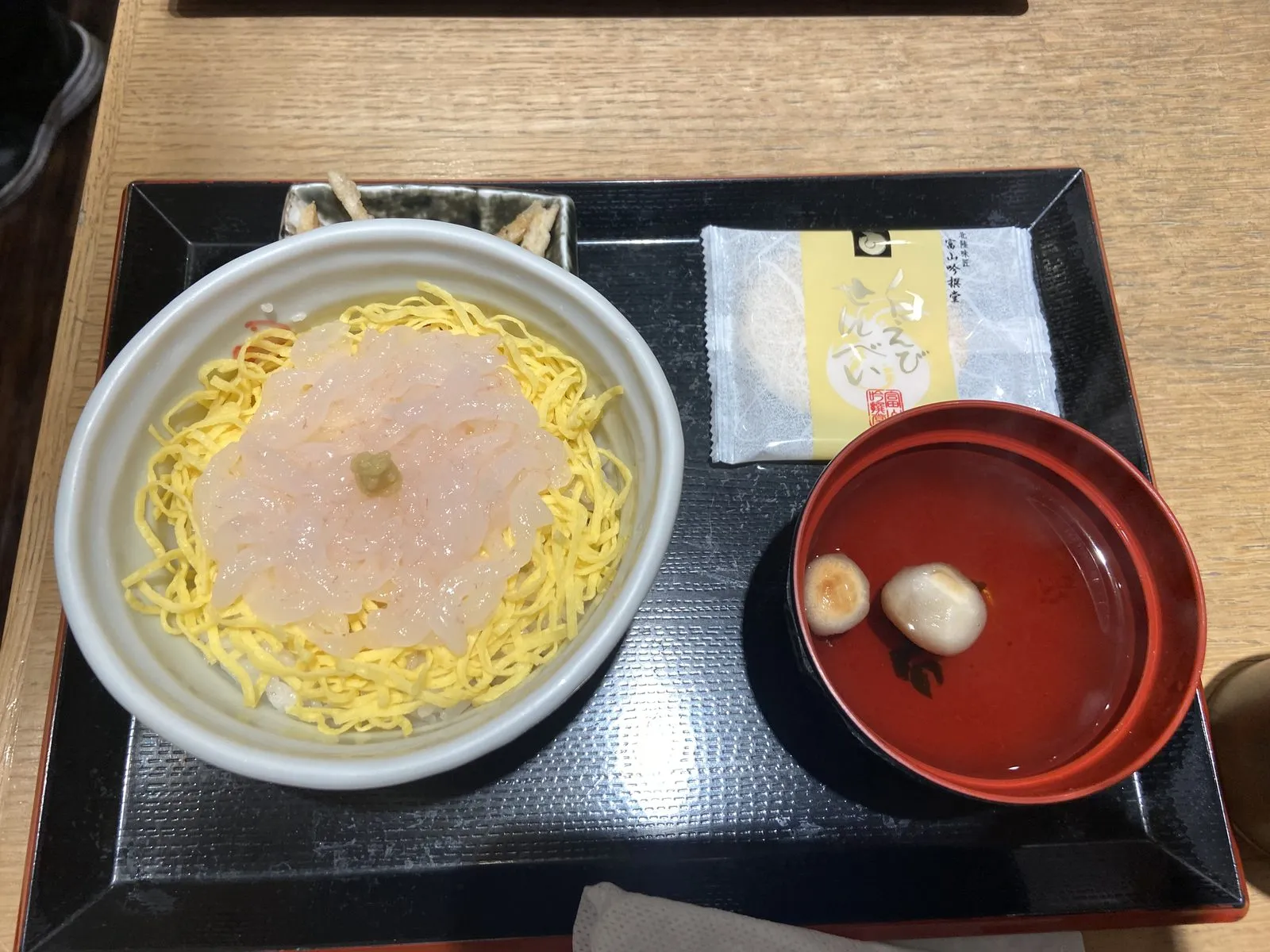
On the way in: white shrimp at Toyama Station
On the drive in we queued over an hour at Shiroebi-tei, in Toyama Station’s market
hall, for the white-shrimp sashimi bowl (¥3,600) — a mound of sweet, translucent
shrimp from Toyama Bay over rice (a loaded “special” runs ¥6,000). The sweetness is the
point. The queue is real; go hungry and early.
The shiroebi bowl at Shiroebi-tei: Toyama Bay’s white shrimp, sweet enough to explain
the line.
Worth it?
Even earthquake-shortened, this was the ride of the trip: open air, emerald water, a
castle in a gorge, and an onsen town at the bottom of it. From October 2026 you get the
whole line back, and October–November is exactly when the gorge turns red and gold.
Plan accordingly — and in the morning, go check that bath sign before anyone else does.
A first-hand account of staying overnight at Fukuchi-in, a Buddhist temple lodging (shukubo) on Mt. Koya — shojin ryori dinner, an onsen bath inside a temple, costs, and how to book.
You don't have to climb all 2,446 steps: the five-story pagoda and the giant-cedar approach are near the bottom — and a road runs to the summit shrine. A first-hand guide.
What Ginzan Onsen is really like — real costs, when the crowds arrive, where to eat, and whether the famous snowy night view is worth the effort to reach it.